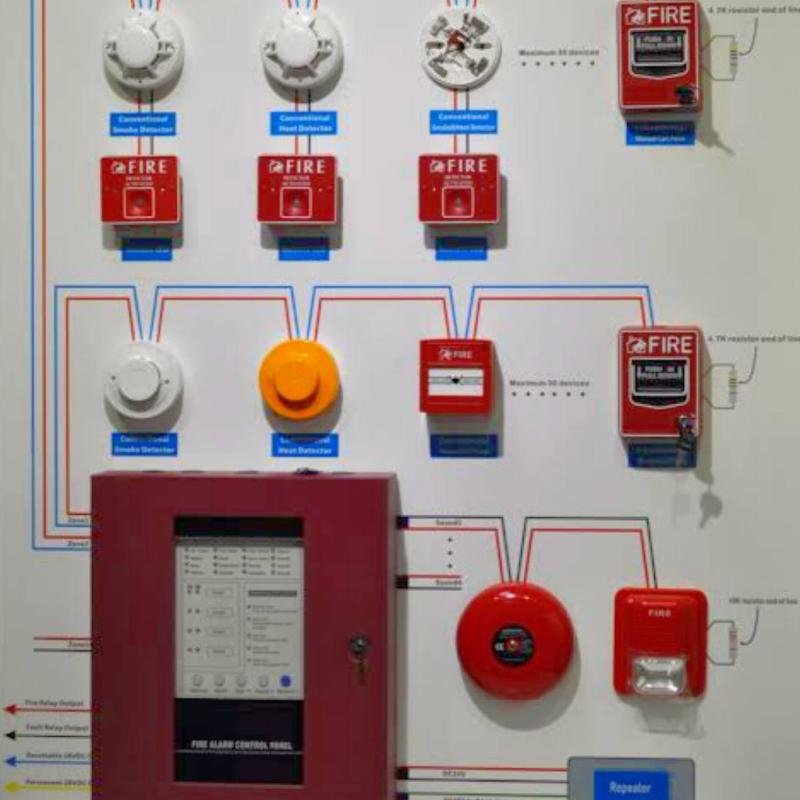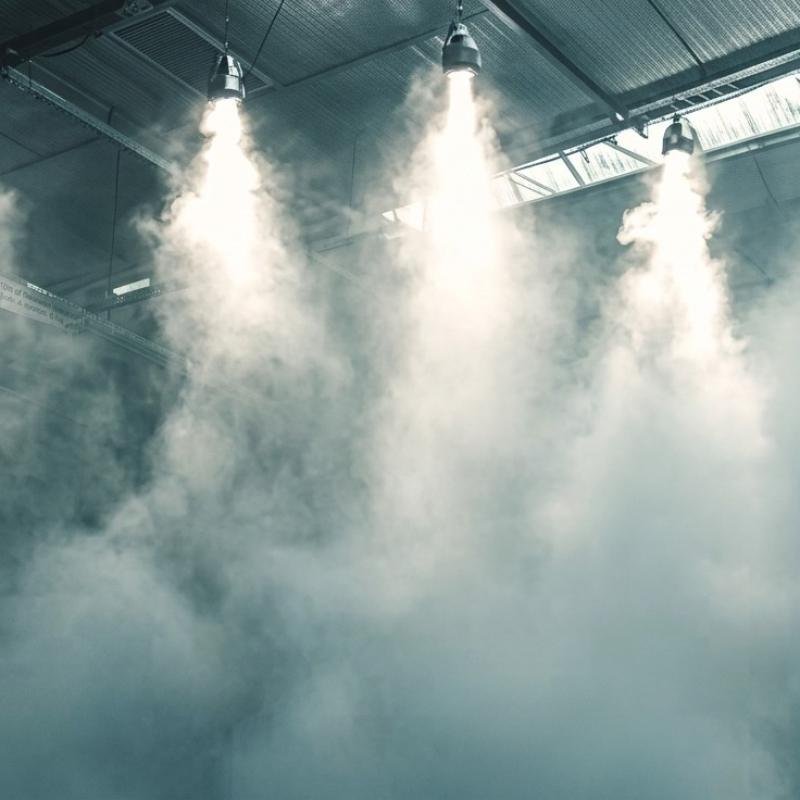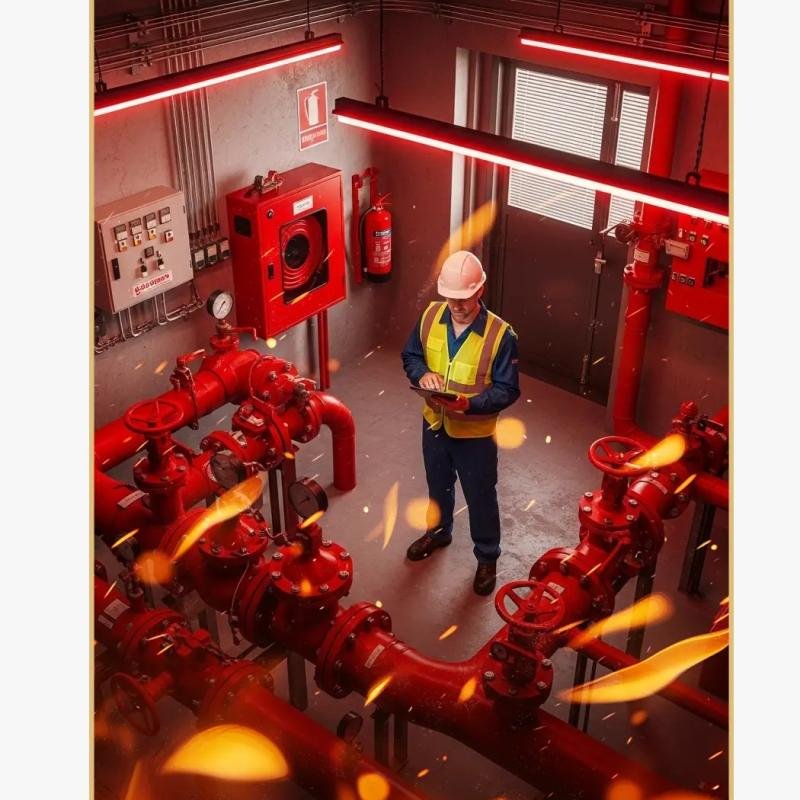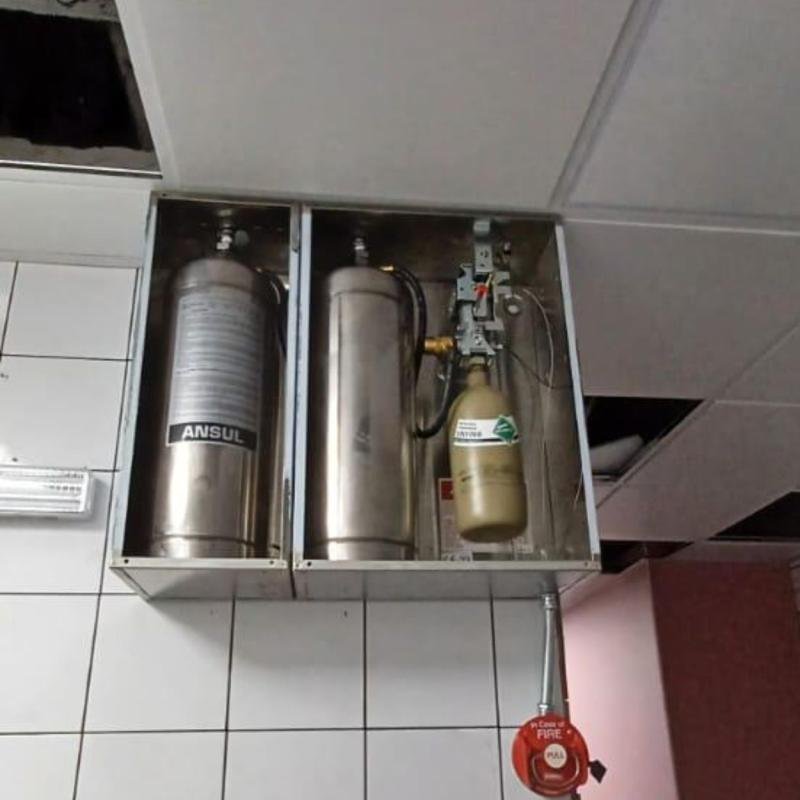






In the architecture of smart buildings, critical life-safety infrastructure can no longer operate as isolated systems. Connecting the main fire alarm control panel to the Building Management System (BMS) is a vital strategic integration. This engineering synergy automates mechanical and electrical infrastructure responses during an emergency, facilitating smooth occupant evacuation while restricting structural damage.
Automated Workflows During Fire Events
When an initiating device (like a smoke detector) transmits an alarm signal to the main fire panel, a pre-programmed Cause and Effect Matrix is executed instantaneously through the BMS. Without needing human intervention, the building shifts into an active defense mode:
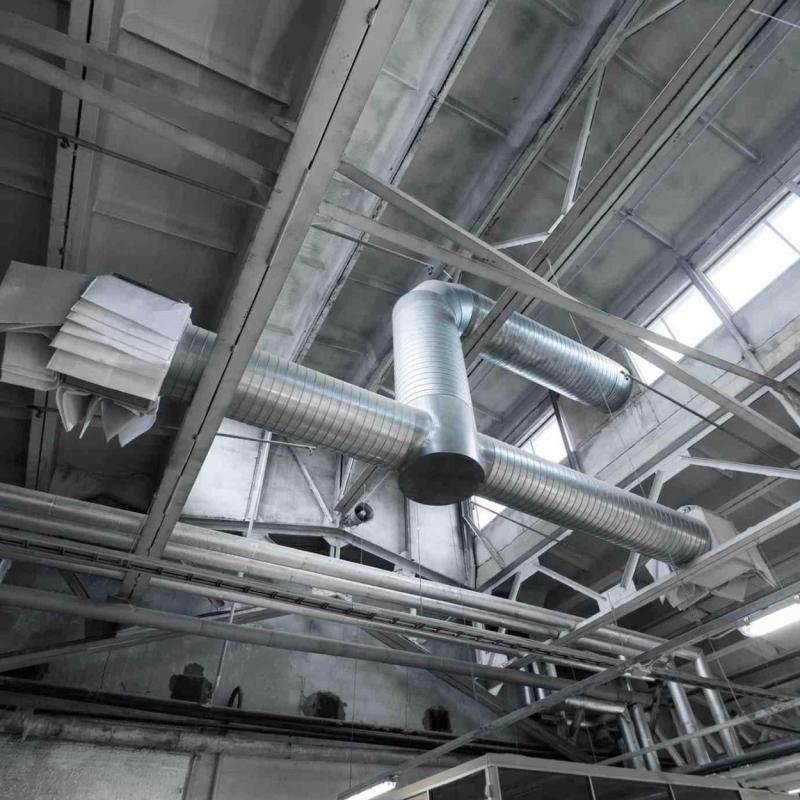
HVAC & Smoke Management: The BMS instantly shuts down localized air handling units (AHUs) and closes motorized fire dampers to prevent toxic smoke from circulating through common air ducts. Concurrently, dedicated smoke extraction fans and staircase pressurization units activate to keep emergency egress pathways totally clear of toxic gas.
Access Control & Containment: Magnetic locks on all emergency exit doors are immediately de-energized, allowing occupants to flee effortlessly. Meanwhile, magnetic hold-opens on structural fire-rated doors release to compartmentalize the flames.
Elevator Recall Protocols: Elevators are automatically summoned to the primary evacuation floor, bypassing standard user requests. The doors remain locked in an open state upon arrival to prevent passengers from becoming trapped due to grid power failure.
BMS Emergency Response Integration Matrix
Sub-System Managed | Automated Emergency Action | Critical Engineering Objective |
|---|---|---|
HVAC Systems | Immediate shutdown & fire damper closure | Halts the distribution of toxic gases across zones |
Egress Pressurization | Activates positive air pressure in stairwells | Keeps vital evacuation routes clear of smoke ingress |
Elevator Infrastructure | Executes primary phase-1 recall to safe floor | Prevents occupant entrapment during utility blackouts |
Access Control | Releases magnetic door locks globally | Eliminates access bottlenecks for swift mass evacuation |
Emergency Lighting | Activates backup lighting and exit paths signage | Provides visual guidance amidst low-visibility conditions |