





Electrical Works in Saudi Arabia: A Guide to Compliance, Specifications, and Best Practices
Introduction: Why Are Electrical Works the Lifeline of Any Facility?
Electrical works represent the vital system that supplies a building with the necessary energy for its operation, starting from lighting and home appliances, through air conditioning and elevator systems, to communication networks and security and safety systems. With the massive urban expansion in the Kingdom of Saudi Arabia, electrical installations are no longer just wires and circuit breakers, but have become an integrated system of precise design, high-quality materials, professional installation, and continuous maintenance, to ensure the safety of lives and property, achieve energy efficiency, and ensure full compliance with systems and regulations.
This comprehensive guide sheds light on all aspects of electrical works in the Kingdom, starting from the regulatory framework and codes, through supervisory authorities and permitting procedures, to best practices for ensuring compliance and quality.
Section One: Regulatory Framework – Key References for Electrical Works
Electrical works in the Kingdom of Saudi Arabia are subject to an integrated system of codes, regulations, and specifications aimed at standardizing criteria and ensuring the highest levels of quality and safety.
First: Saudi Electrical Code (SBC 401)
The Saudi Electrical Code (SBC 401) is the primary reference for electrical works in the Kingdom, and it is one of the sub-codes within the Saudi Building Code system. This code aims to provide minimum requirements for the protection of lives, property, and public welfare, by regulating the design, installation, operation, maintenance, and safety of electrical systems, devices, and installations in buildings.
Key areas covered by SBC 401:
Design of Electrical Systems: Specifies the engineering requirements for designing electrical distribution networks, circuit loads, protection circuit breakers, earthing, and lightning protection.
Material Selection: Requires the use of electrical materials conforming to Saudi Standard Specifications (SASO), such as wires, circuit breakers, switches, sockets, and conduit pipes.
Installation Methods: Mandates the application of correct and safe installation methods that ensure no short circuits, overheating, or shock hazards occur.
Fire Safety: Includes requirements for preventing fires caused by electrical faults, such as using wires with appropriate current-carrying capacity and installing protection circuit breakers against overcurrent and earth leakage.
Testing and Operation: Mandates comprehensive testing after installation to verify the system's safety and freedom from faults.
🔗 Official Reference:
Saudi Building Code Center – Saudi Electrical Code SBC 401
Second: Saudi Standard Specifications (SASO)
The Saudi Standards, Metrology and Quality Organization (SASO) requires standard specifications for all electrical materials and equipment used in the Saudi market, including:
Standard Specifications for Electrical Circuit Breakers: These specifications define the quality, performance, and safety requirements for electrical circuit breakers used in residential, commercial, and industrial buildings.
Specifications for Electrical Wires and Cables: Include requirements for electrical resistance, thermal insulation, fire resistance, and dimensions.
Technical Regulation for Low-Voltage Electrical Equipment: Defines safety and performance requirements for low-voltage electrical equipment and devices, such as switches, sockets, and transformers.
Technical Regulation for Electromagnetic Compatibility (EMC): Aims to ensure that electrical equipment does not emit electromagnetic interference affecting other equipment, and that it is compatible with the surrounding electromagnetic environment.
🔗 Official References:
Saudi Standards, Metrology and Quality Organization (SASO)
SABER System – Registration and Certification
Third: Civil Defense Requirements
The General Directorate of Civil Defense pays special attention to safety requirements in electrical installations, as electricity is considered one of the main causes of building fires. According to the Preventive Requirements for Fire Protection in Facilities, the following must be ensured:
Specifications of electrical installations conform to the specifications of the Ministry of Water and Electricity and Saudi standard specifications.
All electrical installations are within insulated and fire-resistant pipes, according to approved specifications.
The main electrical circuit breaker location is outside the building (for temporary buildings), within a container made of non-combustible materials.
The electrical generator room is separate from the building, constructed of fire-resistant materials for a period of no less than four hours, and equipped with appropriate ventilation systems.
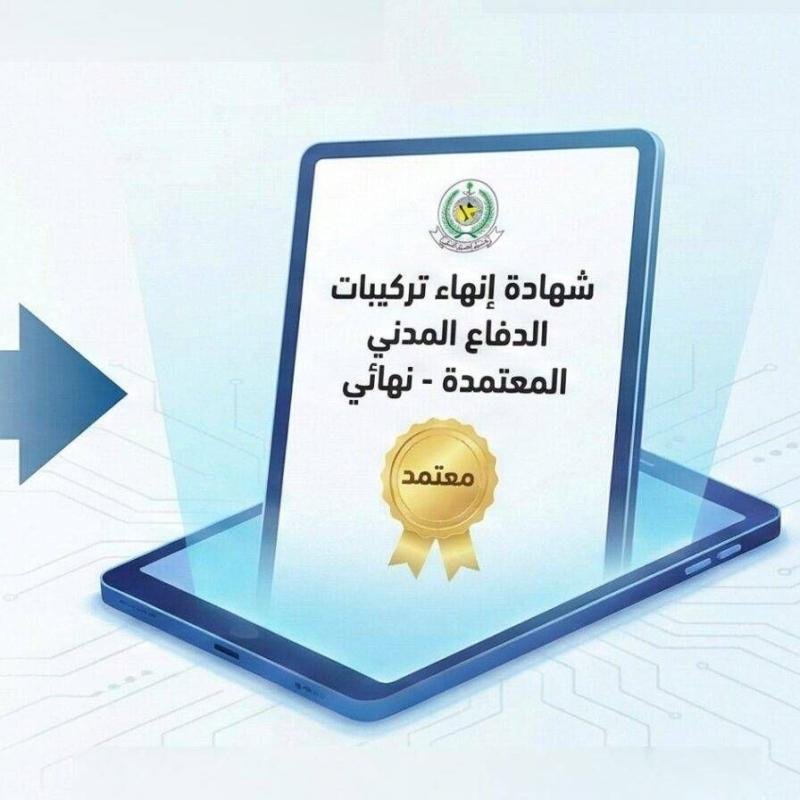
Issuance of an Electrical Installations Safety Certificate from an accredited engineering office, proving that the electrical network is safe and conforms to specifications, as a condition for obtaining or renewing the facility license.
🔗 Official Reference:
General Directorate of Saudi Civil Defense – Electrical Safety Requirements
Fourth: SABER System and Conformity Certificates
The SABER system is the official electronic platform issued by SASO, for managing and registering products and issuing conformity certificates. The system aims to ensure product safety and conformity to Saudi standard specifications before entering the market.
Key Procedures via the SABER System:
Product Registration: The importer or manufacturer registers product data on the SABER platform.
Selection of an Approved Conformity Assessment Body: An SASO-approved body is selected to conduct the Conformity Assessment.
Obtaining a Product Conformity Certificate (PCoC): Proves that the product meets the requirements of technical regulations and standard specifications.
Issuing a Shipment Conformity Certificate (SCoC): For each imported shipment, based on the PCoC, used to complete customs clearance procedures.
🔗 Official References:
SABER Electronic Platform
Approved Conformity Assessment Bodies
Fifth: Guide for Implementing Electrical Works in Residential Buildings
The Saudi Building Code Center issued the Guide for Implementing Electrical Works in Residential Buildings (SBCGuide-R3) , which is a practical reference for contractors, engineers, and technicians, detailing how to apply the requirements of SBC 401 on the ground. It includes:
Material Selection and Specifications: Explains the types of wires, circuit breakers, switches, and sockets suitable for different uses.
Installation Methods: Explains how to route wires inside walls and ceilings and use appropriate insulation pipes.
Connections and Distributions: Shows how to distribute electrical loads across circuits and connect sub and main panels.
Earthing and Protection: Explains the requirements for the earthing system, installation of Residual Current Devices (RCDs), and lightning protection.
Testing and Operation: Specifies the tests to be performed after installation, and how to safely operate the system.
🔗 Official Reference:
Guide for Implementing Electrical Works in Residential Buildings (SBCGuide-R3)
Section Two: Supervisory Authorities and Accredited References
Several government entities are responsible for supervising and monitoring electrical works in the Kingdom:
| Entity | Key Responsibilities |
|---|---|
| Saudi Building Code Center (SBC) | Developing and updating the Saudi Building Code, including the Saudi Electrical Code SBC 401. |
| Saudi Standards, Metrology and Quality Organization (SASO) | Issuing standard specifications for electrical materials and equipment, supervising the SABER system, and granting conformity certificates. |
| General Directorate of Civil Defense | Supervising safety and fire prevention requirements related to electrical installations, and issuing safety certificates. |
| Ministry of Municipal and Rural Affairs and Housing (MOMRAH) | General supervision of municipal and construction licenses and issuing regulations organizing construction and electrical works. |
| Saudi Council of Engineers (SCE) | Licensing engineering offices and engineers working in the design and supervision of electrical systems. |
| Saudi Contractors Authority (SCA) | Classifying electrical contractors and determining their technical and financial grades and capabilities. |
| Saudi Electricity Company (SEC) | Providing electrical service to buildings, reviewing electrical plans before connection, and supervising technical requirements for connections. |
🔗 Official References:
Ministry of Municipal and Rural Affairs and Housing
Saudi Council of Engineers
Saudi Contractors Authority
Saudi Electricity Company
Section Three: Permitting and Licensing Procedures
To carry out electrical works within a construction or commercial project, the procedures for obtaining the necessary permits must be followed:
First: Issuing a Building Permit via the Balady Platform
All construction licensing procedures are carried out electronically via the Balady platform. The submitted engineering plans must include precise details of the electrical system, including:
Detailed Electrical Plans: Locations of electrical panels, circuit distribution, wiring routes, lighting points, and sockets.
Electrical Load Calculations: Estimation of total loads and their distribution across circuits, based on the requirements of SBC 401.
Earthing and Lightning Protection Plans: Details of the earthing system, locations of earth rods, and the lightning protection system (if any).
Service Feasibility Certificate from the Saudi Electricity Company: Issued by the company before issuing the building permit, indicating the possibility of connecting the electrical service to the building and the network's capacity to meet the required loads.
🔗 Official Reference:
Balady Platform – Municipal E-Services
Second: Electrical Contractor Classification
No contractor can carry out electrical works in the Kingdom without obtaining a valid Contractor Classification Certificate. Classification is done via the Balady platform, based on the contractor's financial, technical, and administrative capabilities. The classification determines the size and type of projects the contractor is eligible to bid for.
Classification Grades for Electrical Contractors:
First Grade: Highest classification, for government projects and major infrastructure.
Second Grade: For large and medium-sized projects.
Third Grade: For medium-sized projects.
Fourth Grade: For small projects.
Fifth Grade: Lowest classification, for very small projects and local projects.
Classification Requirements:
Valid commercial register including electrical contracting activity.
Audited financial statements for the last fiscal year.
Engineering and technical staff registered with the Saudi Council of Engineers.
Documentation of previous projects and completion certificates.
🔗 Official References:
Balady Platform – Contractor Classification
Saudi Contractors Authority
Third: Electrical Installations Safety Certificate
After completing the installation works, an Electrical Installations Safety Certificate must be obtained from an accredited engineering office, proving that the electrical network is safe and conforms to Civil Defense requirements and the Saudi Building Code. This certificate is required when issuing or renewing the facility license.
Steps to Obtain the Certificate:
Contracting with an Accredited Engineering Office: The office inspects and evaluates the electrical installation system in the facility.
Conducting Tests: This includes insulation testing, continuity testing, protection circuit breaker testing, and earthing system testing.
Issuing the Technical Report: Includes test results and proof of system conformity to specifications.
Issuing the Certificate: After approving the report, the office issues the Electrical Installations Safety Certificate.
🔗 Official Reference:
Issuance of Electrical Installations Safety Certificate – Services Guide
Section Four: Types of Electrical Systems and Implementation Stages
1. Types of Electrical Systems in Buildings
Electrical systems in modern buildings include several integrated subsystems, each covering a specific aspect of distribution and use:
Low Voltage System: Includes the electricity distribution network inside the building, starting from the main distribution panel to sub-distribution panels, switches, and sockets. This system must be designed according to the requirements of SBC 401, considering equal load distribution across circuits, and installing appropriate protection circuit breakers for each circuit.
Lighting System: Includes all interior and exterior lighting units, control switches, and lighting control systems (such as sensors and timers). Lighting design must comply with energy efficiency requirements, and all lighting units must conform to Saudi standard specifications.
Power System: Includes electrical installations for high-load devices, such as air conditioning units, pumps, elevators, boilers, and electric motors. These installations require wires with larger cross-sectional areas and appropriate protection circuit breakers.
Earthing and Lightning Protection System: Aims to protect lives and property from the risks of electric shock and lightning strikes. The system consists of earth electrodes (copper or galvanized rods) buried in the soil, and conductors connecting all metal parts in the building to the earthing system.
Emergency Generators System: Includes backup generators that operate automatically when the main electrical supply fails, to feed vital loads such as emergency lighting, elevators, fire pumps, and security and safety systems.
2. Stages of Implementing Electrical Works
To obtain an effective and safe electrical system, an organized work methodology must be followed:
Stage One: Design and Planning
The process begins with a careful study of the building's needs and usage nature, including:
Electrical Load Calculation: Determining the expected total loads based on the building area, number of units, and types of devices used.
Choosing the Distribution System: Determining whether the system will be radial, ring, or duplex, based on the building size and reliability requirements.
Preparing Detailed Electrical Plans: Including circuit distribution plans, panel locations, wiring routes, and earthing plans.
Stage Two: Coordination with Other Disciplines
Coordination between electrical, civil, mechanical, and safety disciplines is vital for project success:
Coordination with the Civil Engineer: Determining distribution panel locations, conduit routes, and ventilation openings for electrical panels.
Coordination with the Mechanical Engineer: Providing appropriate electrical supply for air conditioning units, pumps, and elevators.
Coordination with the Safety Engineer: Ensuring integration of the electrical system with fire alarm and suppression systems, and providing emergency lighting.
Stage Three: Material Supply and Quality Inspection
Material Selection: Supplying wires, circuit breakers, switches, and sockets from approved brands conforming to SASO.
Quality Inspection: Ensuring each product has obtained a conformity certificate via the SABER system, and inspecting materials for defects.
Material Storage: Storing materials in dry, clean places away from moisture and heat.
Stage Four: Installation and Execution
Conduit Installation: Fixing insulation conduits (PVC or metal) in walls and ceilings before pouring concrete, ensuring adequate spacing between conduits.
Wiring Pulling: Pulling wires inside conduits using specialized tools, ensuring the insulation is not scratched or damaged.
Panel Board Installation: Fixing main and sub-distribution panels in their specified locations, and connecting wires according to approved plans.
Switch and Outlet Installation: Fixing mounting boxes in walls, and installing switches and outlets after plastering is completed.
Lighting Fixture Installation: Fixing lighting fixtures in ceilings and walls, and connecting them with appropriate wires.
Stage Five: Testing, Commissioning, and Handover
Insulation Resistance Test: Measuring the insulation resistance of wires to ensure no current leakage.
Continuity Test: Ensuring the integrity of connections and the absence of short circuits or wire breaks.
Protection Circuit Breaker Testing: Testing overcurrent circuit breakers (MCB) and earth leakage circuit breakers (RCD) to ensure they operate within the specified range.
Earthing System Testing: Measuring the resistance of the earthing system to ensure it does not exceed permissible limits.
Performance Testing: Operating the system and testing all circuits, lighting, sockets, and devices to ensure they function normally.
Preparing a Comprehensive Technical Report: Including the results of all tests, proof of system conformity to standards, and As-built Drawings.
Section Five: Best Practices for Quality and Compliance
Rely on an Accredited Engineering Office: Contracting with an engineering office accredited by the Saudi Council of Engineers to design plans and supervise implementation according to the latest standards.
Choose Materials Conforming to Specifications: Ensuring that all supplied electrical materials bear conformity certificates to SASO via the SABER system.
Comply with Civil Defense Requirements: Ensuring electrical installations are safe, all conduits are insulated and fire-resistant, and the generator room is separate from the building.
Choose an Accredited and Experienced Contractor: Verifying the contractor's record and evaluating their previous work, and ensuring they hold a valid Contractor Classification Certificate in the electrical field.
Obtain the Electrical Installations Safety Certificate: Issuing the certificate from an accredited engineering office after installation completion, as a condition for obtaining the facility license.
Documentation and Final Handover: Obtaining a comprehensive technical report after installation completion, including test results, proof of system conformity to standards, and As-built Drawings.
Periodic Maintenance: Establishing a periodic maintenance plan including inspecting electrical panels, cleaning them, testing protection circuit breakers, and measuring balance currents, to ensure the continued safety and efficiency of the system.
Conclusion: Investing in Compliance is an Investment in Safety and Reliability
In conclusion, electrical works in the Kingdom of Saudi Arabia represent an integrated system of codes, regulations, and specifications aimed at achieving the highest levels of quality, safety, and reliability. By complying with the Saudi Electrical Code (SBC 401) , following Saudi Standard Specifications (SASO) , adhering to Civil Defense requirements , obtaining conformity certificates via the SABER system , and contracting with accredited and classified engineering offices and contractors, any project can ensure a safe, effective electrical system compliant with the highest standards.
Investing in high-quality, code-compliant electrical works is not just an investment in the building's infrastructure, but an investment in the safety of its occupants, the long-term sustainability and value of the building, and the avoidance of fires, failures, and fines. Start today by assessing your project's needs, contacting the competent authorities to obtain permits, and relying on accredited experts and engineers to ensure your facility's electrical system is safe, reliable, and compliant with the highest standards.