Safety Systems in Riyadh: A Comprehensive Guide to Fire Safety Systems with Active Guard
introduction
With the rapid urban development in the Kingdom of Saudi Arabia, particularly in the capital, Riyadh, fire safety systems have become a top priority for both government and private institutions. Fires are among the most dangerous disasters, potentially leading to significant loss of life and property, thus necessitating the implementation of integrated prevention, warning, and firefighting systems.
In this comprehensive guide, we review the most prominent fire safety systems in Riyadh, focusing on ActiveGuard, a leading provider of fire safety and protection solutions. We also address the most frequently asked questions in each area of fire safety.
Chapter One: The Importance of Fire Safety Systems in Riyadh
1.1 Environmental and urban challenges in Riyadh
Riyadh is one of the largest cities in the Middle East, characterized by high population density and a diverse mix of urban uses (residential, commercial, industrial, educational, and medical). This diversity increases the likelihood of fires due to:
- Intensive use of electrical appliances.
- Large gatherings of people in buildings.
- Construction expansion and mega-projects.
- Climatic changes that may affect cooling and heating systems.
- 1.2 Laws and Regulations in the Kingdom of Saudi Arabia
- The Kingdom of Saudi Arabia has established strict fire safety legislation, including:
- The Civil Defense Law.
- The Fire Safety Regulations for Buildings.
- Requirements for installing alarm and fire suppression systems.
- Mandatory periodic training for employees in facilities.
- These laws require all facilities to install integrated fire safety systems and to ensure their functionality and effectiveness on a regular basis.
- 1.3 Active Guard's Role in Enhancing Fire Safety
- Active Guard is a leading fire safety company in Riyadh, offering a wide range of services, including:
- Installation of fire alarm systems.
- Provision of fire suppression systems (gas, foam, water).
- Maintenance and inspection of fire extinguishers.
- Fire prevention consultations and training.
- Supply and installation of integrated safety systems.
Chapter 2: Fire Alarm Systems
2.1 What are Fire Alarm Systems?
Fire alarm systems are electronic systems used for the early detection of fire or smoke, alerting people in the building to take necessary action. These systems are among the most important elements of fire safety, as they help in:
Reducing the time taken to detect a fire.
Saving lives and property.
Reducing damage caused by fire.
2.2 Types of Fire Alarm Systems
2.2.1 Conventional Fire Alarm Systems
Used in small or medium-sized buildings.
Divide the building into zones; when a fire occurs in one zone, the alert appears on the control panel.
Do not precisely pinpoint the fire location.
2.2.2 Addressable Fire Alarm Systems
Used in large and complex buildings.
Precisely pinpoint the location of the fire or smoke.
Allow for remote control and monitoring.
Used in hospitals, airports, hotels, commercial complexes.
2.2.3 Wireless Fire Alarm Systems
Do not require cables.
Easy to install and maintain.
Suitable for old facilities or those where cable installation is difficult.
2.3 Components of Fire Alarm Systems
Smoke Detectors
Heat Detectors
Flame Detectors
Sounders & Strobes (Audible and Visual Alarms)
Control Panel
Wireless Transmitters (in wireless systems)
2.4 Criteria for Selecting Fire Alarm Systems
Size and type of building.
Nature of activity (commercial, industrial, residential).
Civil Defense requirements.
Cost and maintenance.
2.5 The Role of Act Guard Company in Installing and Maintaining Fire Alarm Systems
Act Guard Company offers comprehensive services in the field of fire alarm systems, including:
Studying the building and determining the most suitable system.
Installing systems according to international standards.
Periodic maintenance and precise technical inspection.
Training personnel on how to handle the system.
Chapter 3: Fire Suppression Systems
3.1 What are Fire Suppression Systems?
Fire suppression systems are systems used to extinguish fires automatically or manually. They are among the most important elements of fire safety, as they reduce the spread of fire and minimize damage.
3.2 Types of Fire Suppression Systems
3.2.1 Sprinkler Systems
Used in most buildings.
Operate automatically when temperature rises.
Effective in extinguishing fires in their early stages.
3.2.2 Gas Suppression Systems
Used in sensitive areas such as server rooms, laboratories, medical centers.
Do not cause damage to equipment.
Use gases like FM-200, Novec 1230, CO2.
3.2.3 Foam Suppression Systems
Used in places containing flammable materials like fuel stations, factories.
Effective in extinguishing fires caused by flammable liquids.
3.2.4 Dry Powder Systems
Used in industrial areas.
Effective in extinguishing electrical fires.
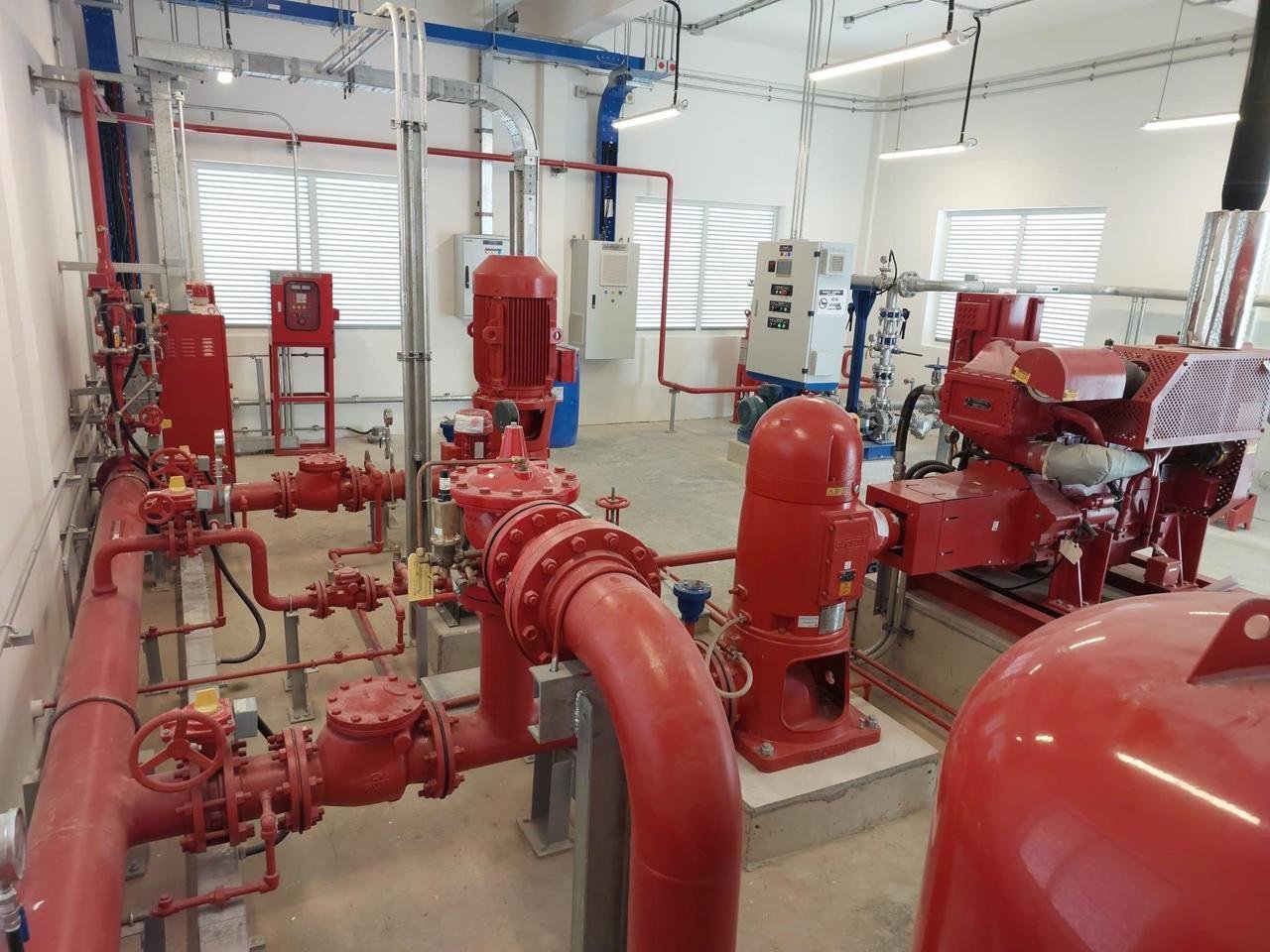
3.3 Components of Fire Suppression Systems
Water sprinklers or gas/foam nozzles.
Water or gas tanks.
Distribution pipes.
Control valves.
Control and activation unit.
3.4 Criteria for Selecting Fire Suppression Systems
Building type and nature of activity.
Flammable materials present.
Civil Defense requirements.
Cost and maintenance.
3.5 The Role of Act Guard Company in Installing and Maintaining Fire Suppression Systems
Act Guard Company offers integrated services in the field of fire suppression systems, including:
Studying the building and determining the most suitable system.
Installing systems according to international standards.
Periodic maintenance and precise technical inspection.
Training personnel on how to handle the system.
Chapter 4: Fire Extinguishers
4.1 What are Fire Extinguishers?
Fire extinguishers are portable devices used to extinguish small fires in their early stages. They are among the most important elements of fire safety, enabling people to intervene quickly before a fire spreads.
4.2 Types of Fire Extinguishers
4.2.1 Water Extinguishers
Used for fires involving solid materials (wood, paper, fabric).
Not to be used on electrical or oil fires.
4.2.2 Foam Extinguishers
Used for fires involving flammable liquids (petrol, oils).
Not to be used on electrical fires.
4.2.3 Carbon Dioxide (CO2) Extinguishers
Used for electrical fires.
Leave no residue.
4.2.4 Dry Powder Extinguishers
Used for all types of fires (solids, liquids, gases, electrical).
Effective in industrial areas.
4.2.5 Wet Chemical Extinguishers
Used for fires involving oils and fats in kitchens.
4.3 Locations for Installing Fire Extinguishers
Corridors and exits.
Kitchens.
Equipment rooms.
Work areas.
Parking lots.
4.4 Maintenance and Inspection of Fire Extinguishers
Periodic inspection (monthly, quarterly, annual).
Recharging extinguishers when pressure is low.
Replacing damaged or expired extinguishers.
4.5 The Role of Act Guard Company in Supplying and Maintaining Fire Extinguishers
Act Guard Company offers integrated services in the field of fire extinguishers, including:
Supplying fire extinguishers from the best global brands.
Installing extinguishers in appropriate locations.
Periodic maintenance and precise technical inspection.
Recharging and replacing extinguishers.
Chapter 5: Fire Prevention
5.1 What is Fire Prevention?
Fire prevention is a set of measures and procedures aimed at reducing the likelihood of a fire occurring and minimizing damage if one does occur.
5.2 Key Fire Prevention Measures
5.2.1 Awareness and Training
Training employees on fire handling.
Conducting regular evacuation drills.
Raising awareness among individuals about fire risks.
5.2.2 Periodic Maintenance
Maintaining electrical appliances.
Inspecting alarm and suppression systems.
Maintaining fire extinguishers.
5.2.3 Safe Storage
Storing flammable materials in designated places.
Avoiding storing materials in corridors and exits.
5.2.4 Controlling Heat Sources
Turning off electrical appliances after use.
Avoiding the use of poor-quality electrical appliances.
5.2.5 Preparing an Emergency Plan
Identifying evacuation routes.
Determining assembly points.
Appointing emergency teams.
5.3 The Role of Act Guard Company in Fire Prevention
Act Guard Company offers advisory and training services in the field of fire prevention, including:
Preparing emergency plans.
Training employees on safety procedures.
Inspecting buildings and identifying risk points.
Providing recommendations to improve fire safety.
Chapter 6: Frequently Asked Questions about Fire Safety Systems
6.1 FAQs about Fire Safety
Q1: What is the importance of fire safety?
A: Fire safety protects lives and property and reduces damage caused by fire.
Q2: What are the components of fire safety?
A: Alarm systems, suppression systems, fire extinguishers, emergency plans, training.
Q3: Who is responsible for fire safety in a building?
A: The building owner or manager, in cooperation with Civil Defense.
6.2 FAQs about Fire Alarm
Q1: What is the difference between conventional and addressable systems?
A: Conventional systems divide the building into zones, while addressable systems precisely pinpoint the fire location.
Q2: How often should fire alarm systems be inspected?
A: The system should be tested monthly, with periodic maintenance every 6 months.
Q3: Can fire alarm systems be installed in old buildings?
A: Yes, wireless or conventional systems can be installed as needed.
6.3 FAQs about Fire Suppression
Q1: What is the best fire suppression system for commercial buildings?
A: Sprinkler systems are the most common and effective.
Q2: Are gas systems safe?
A: Yes, if installed and maintained according to standards.
Q3: How often should fire suppression systems be maintained?
A: The system should be maintained at least annually.
6.4 FAQs about Fire Extinguishers
Q1: How many fire extinguishers are required in a building?
A: It depends on the building area and type of activity, according to Civil Defense requirements.
Q2: How often should fire extinguishers be inspected?
A: Extinguishers should be inspected monthly, with periodic maintenance every 6 months.
Q3: Can one extinguisher be used for all types of fires?
A: No, the appropriate extinguisher for the fire type must be used.
6.5 FAQs about Fire Prevention
Q1: What are the most important fire prevention measures?
A: Awareness, maintenance, safe storage, controlling heat sources, preparing an emergency plan.
Q2: How often should evacuation drills be conducted?
A: Regular evacuation drills should be conducted (quarterly or semi-annually).
Q3: Who can prepare an emergency plan?
A: The plan can be prepared by a fire safety specialist or a specialized company like Act Guard.
Chapter 7: Act Guard Company Services in the Field of Fire Safety
7.1 Installation of Fire Safety Systems
Fire alarm systems.
Fire suppression systems.
Fire extinguishers.
7.2 Maintenance and Inspection of Safety Systems
Periodic inspection of alarm and suppression systems.
Maintenance of fire extinguishers.
Recharging and replacing extinguishers.
7.3 Consultations and Training
Preparing emergency plans.
Training employees on safety procedures.
Inspecting buildings and identifying risk points.
7.4 Supply of Safety Equipment
Fire extinguishers.
Smoke and heat detection devices.
Evacuation equipment.
Conclusion
Fire safety is not an option but a necessity in light of urban and industrial development in Riyadh. Act Guard Company is one of the leading companies in the field of fire safety, offering integrated solutions including installation, maintenance, training, and consultations. Following preventive measures, using modern systems, and conducting regular training are all factors that contribute to protecting lives and property from the danger of fires.







 by activeGuard