The Importance of Safety Systems and Equipment in Firefighting
1. Protection of Lives and Property
Fires are among the most dangerous disasters that facilities can face, capable of causing significant human and material losses in a short time. Safety systems and equipment mitigate these risks by:
Early detection of fires.
Automatic or manual fire suppression.
Alerting individuals and enabling safe evacuation.
Reducing material and environmental damage.
2. Compliance with Standards and Regulations
Most countries and regulatory authorities mandate the installation of safety systems and equipment in facilities according to international standards such as:
NFPA (National Fire Protection Association)
ISO (International Organization for Standardization)
BS (British Standards)
SASO (Saudi Arabian Standards Organization) These systems ensure compliance with these standards, thereby reducing legal and financial risks.
3. Reducing Economic Losses
Automatic suppression systems help reduce economic losses resulting from fires by:
Decreasing repair and maintenance costs.
Minimizing production or service downtime.
Reducing insurance premiums.
Automatic Fire Suppression Systems: Definition and Functions
Definition of Automatic Fire Suppression Systems
Automatic fire suppression systems are designed to operate automatically upon detection of fire indicators (such as heat, smoke, or flame), without the need for human intervention. These systems are used in facilities requiring a high level of safety, such as:
High-rise buildings
Hospitals
Commercial centers
Factories
Airports
Schools
Functions of Automatic Fire Suppression Systems
Early fire detection.
Automatic fire extinguishment.
Alerting individuals via alarm systems.
Integration with central control systems.
Types of Automatic Fire Suppression Systems
1. Sprinkler System
Definition: A sprinkler system is one of the most common and widely used automatic fire suppression systems in various facilities. It operates by distributing water through automatic sprinkler heads upon fire detection.
Mechanism of Operation:
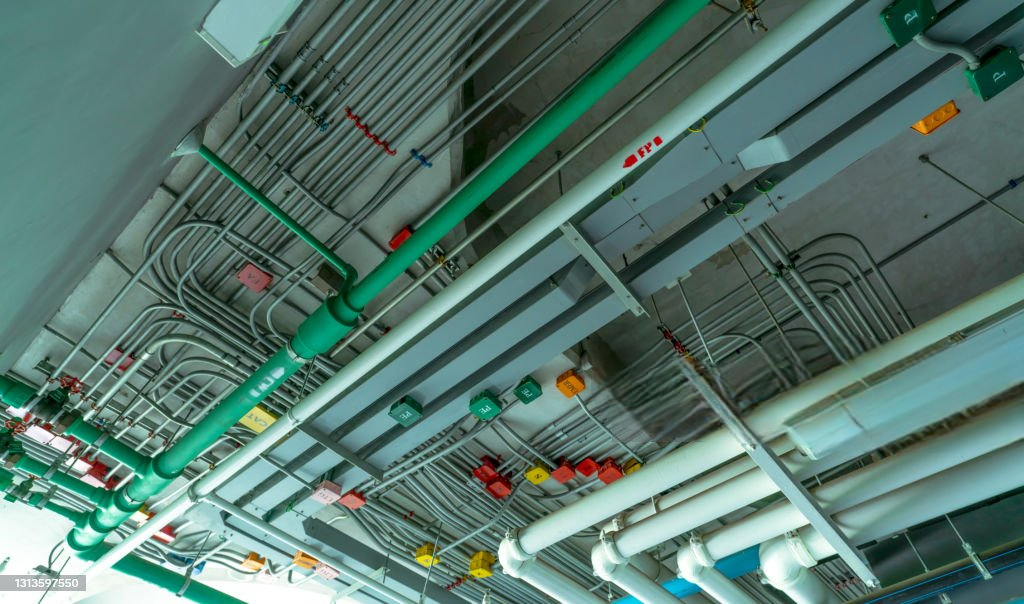
Sprinklers are installed in the ceiling or walls.
When the temperature rises to a specific level (typically 68°C), the heat-sensitive element in the sprinkler head bursts.
Water flows from the sprinkler onto the fire area.
Water is distributed evenly to cover the maximum possible area.
Types of Sprinkler Systems:
Wet Pipe System: Contains water in all pipes at all times; used in areas not exposed to freezing.
Dry Pipe System: Contains air or gas in the pipes; used in areas where water may freeze.
Pre-Action System: Requires dual detection (heat and smoke) before water flow; used in sensitive areas like libraries and museums.
Deluge System: Used in areas requiring rapid and comprehensive coverage, such as hazardous material warehouses.
Combination System: Combines features of wet and dry pipe systems.
Advantages of Sprinkler Systems:
High effectiveness in extinguishing fires.
Ease of maintenance and operation.
Lower cost compared to other systems.
Compatible with most facilities.
Applications of Sprinkler Systems:
Residential buildings
Commercial centers
Hospitals
Schools
Factories
2. Clean Agent Fire Suppression System
Definition: A clean agent fire suppression system uses environmentally harmless gases to smother fires without leaving residue or damaging equipment. It is used in sensitive areas where water cannot be utilized.
Mechanism of Operation:
The gas is stored in pressurized cylinders.
Upon fire detection, the gas is released into the affected area.
The gas works by lowering oxygen concentration or inhibiting the chemical reaction of the fire.
It leaves no residue or damage to equipment.
Types of Clean Agents:
FM200 (HFC-227ea): An effective fire-extinguishing gas that leaves no residue; used in server rooms and sensitive centers.
NOVEC 1230 (FK-5-1-12): An environmentally friendly gas that does not harm the ozone layer; used in sensitive facilities.
Advantages of Clean Agent Systems:
Leaves no residue or equipment damage.
Highly effective against electrical fires.
Environmentally friendly.
Suitable for sensitive areas.
Applications of Clean Agent Systems:
Server rooms
Data centers
Laboratories
Hospitals
Government buildings
3. Carbon Dioxide (CO2) Fire Suppression System
Definition: A CO2 fire suppression system uses carbon dioxide gas to smother a fire by reducing the oxygen concentration in the affected area.
Mechanism of Operation:
Carbon dioxide is stored in pressurized cylinders.
Upon fire detection, the gas is released into the affected area.
The gas reduces oxygen concentration to a level that cannot sustain the fire.
Advantages of CO2 Systems:
High effectiveness in extinguishing fires.
Leaves no residue or equipment damage.
Suitable for unoccupied areas.
Warnings for Using CO2 Systems:
Not to be used in occupied spaces, as it may cause asphyxiation.
Early warning alarm systems must be installed to alert individuals.
Applications of CO2 Systems:
Generator rooms
Electrical rooms
Hazardous material warehouses
4. Foam Fire Suppression System
Definition: A foam fire suppression system uses special foam to create an insulating layer on the fuel surface, preventing oxygen from reaching it and extinguishing the fire.
Mechanism of Operation:
Water is mixed with a foaming agent.
The foam is distributed over the fuel surface.
The foam isolates the fuel from oxygen.
Types of Foam (by Expansion):
Low Expansion: Used for liquid fuel fires.
Medium Expansion: Used in industrial facilities.
High Expansion: Used for large-scale fires.
Advantages of Foam Systems:
Highly effective against liquid fires.
Does not leave residue or damage equipment.
Suitable for industrial areas.
Applications of Foam Systems:
Fuel depots
Fueling stations
Factories
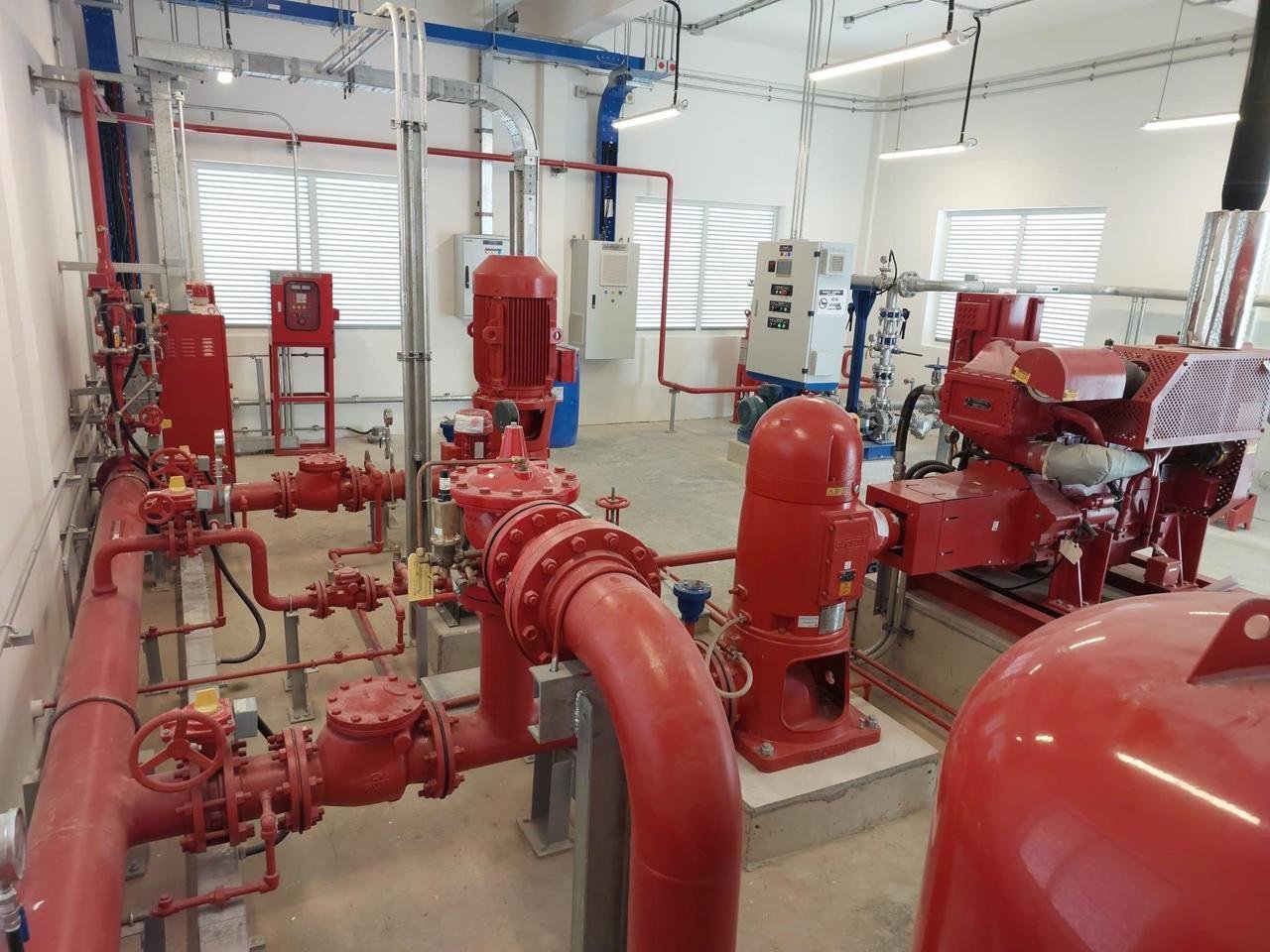
5. Fire Pumps
Definition: Fire pumps are equipment used to pump water at high pressure to fire suppression systems, ensuring adequate water flow in case of fire.
Types of Fire Pumps:
Electric Pumps: Operate using electrical power.
Diesel Pumps: Operate using diesel; used in areas where power may be interrupted.
Manual Pumps: Used in emergency situations.
Advantages of Fire Pumps:
Ensure high-pressure water flow.
Easy to maintain and operate.
Compatible with all fire suppression systems.
Applications of Fire Pumps:
High-rise buildings
Factories
Commercial centers
Components of Automatic Fire Suppression Systems
Fire Sprinklers:
Pendant Sprinkler: Used in areas with suspended ceilings.
Upright Sprinkler: Used in areas without suspended ceilings.
Control Valves:
Zone Control Valve: Controls water flow to each zone.
Gate Valves OS&Y: Controls water flow in pipes.
Alarm Systems:
Manual Alarm Systems: Rely on human intervention.
Automatic Alarm Systems: Rely on sensor devices.
Comparison: Manual vs. Automatic Systems
Element
Manual Systems
Automatic Systems
Activation Method
Relies on human intervention
Operates automatically using sensors
Cost
Lower
Higher
Effectiveness
Depends on the presence of people
Effective at all times
Reliability
May be delayed in activation
Provides faster response
Installation
Simple
More complex
Choosing the Appropriate Type of Fire Suppression System
1. Based on Facility Type:
Residential Buildings: Sprinkler System.
Commercial Centers: Sprinkler System and Clean Agent System.
Factories: Foam System and CO2 System.
Hospitals: Clean Agent System.
2. Based on Fuel Type:
Solid Fuel Fires (Class A): Sprinkler System.
Liquid Fuel Fires (Class B): Foam System.
Electrical Fires (Class C): Clean Agent System.
Maintenance of Automatic Fire Suppression Systems
1. Periodic Inspection:
Inspection of sprinklers and pipes.
Inspection of valves and pumps.
Inspection of alarm systems.
2. Preventive Maintenance:
Cleaning equipment.
Replacing damaged parts.
Periodic testing of systems.
Conclusion
Automatic fire suppression systems are among the most critical safety elements in various facilities, contributing to the protection of lives and property from the danger of fires. These systems include sprinkler systems, clean agent systems, carbon dioxide systems, foam systems, and fire pumps. Choosing the appropriate system requires consideration of the facility type and fuel type, along with adherence to international standards and regulations. Regular system maintenance is also essential to ensure their effectiveness in emergencies.
Keywords: Automatic Fire Suppression Systems, Sprinkler System, Clean Agent Fire Suppression, FM200, NOVEC 1230, CO2 Fire Suppression, Foam Fire Suppression, Fire Pumps, Safety Systems, Firefighting Equipment, Alarm Systems, Fire System Maintenance, Choosing Fire Systems, Fire Safety Standards.






 by activeGuard