In the heart of the Kingdom of Saudi Arabia, where Riyadh thrives as a vibrant urban and commercial hub, the importance of advanced safety systems to protect lives and property is increasing. Rapid urban growth and economic expansion impose unique challenges requiring comprehensive security solutions, especially in the field of fire safety. In this context, Act Guard emerges as a trusted and leading partner in providing integrated safety systems, committed to the highest international and local standards to ensure a safe and sustainable environment.
This comprehensive article aims to explore the various dimensions of fire safety systems in Riyadh, focusing on the expertise and services provided by Act Guard. We will delve into the concepts of fire safety, fire alarms, fire suppression, fire extinguishers, and fire prevention, highlighting the importance of each in the context of a modern city.
Fire Safety: The Cornerstone of a Safe Riyadh Environment
Fire safety is a broad concept encompassing all actions and measures aimed at preventing the outbreak of fires, limiting their spread, reducing resulting damages, and ensuring safe and effective evacuation in the event of a fire. In Riyadh, where population density is increasing and facilities range from residential to commercial and industrial, this importance is multiplied.
Unique Environmental and Urban Challenges in Riyadh
Riyadh faces unique challenges that increase the likelihood of fires and require advanced safety strategies. These challenges include high population density, continuous urban expansion with many high-rise buildings, and the diverse operational environment of industrial and commercial facilities. Furthermore, regional climatic conditions, such as high temperatures, can exacerbate fire risks.
Regulatory Framework and Legislation in the Kingdom of Saudi Arabia
The Kingdom of Saudi Arabia places great emphasis on fire safety and has established stringent legislation and a comprehensive system that all must adhere to. The Civil Defense system and the Fire Safety Regulations for Buildings are fundamental pillars that mandate the installation and maintenance of alarm and suppression systems and require periodic training for personnel. This commitment to international and local standards ensures a high level of protection.
In this framework, companies like Act Guard play a vital role in helping facilities comply with these regulations by providing specialized consultations, and designing and implementing systems that fully comply with the Saudi Building Code for Fire Protection (SBC 801), in addition to international standards such as NFPA.
Fire Alarm Systems: The Eyes and Ears of Buildings
Fire alarm systems are considered the first line of defense against fires, providing early detection of danger signs and alerting building occupants to take necessary actions. The effectiveness of these systems lies in their ability to reduce the time taken to detect a fire, significantly contributing to saving lives and property.
Types of Available Fire Alarm Systems
Modern technology offers several types of fire alarm systems, each designed to meet different needs:
Conventional Systems: Commonly used in small to medium-sized buildings, dividing the building into zones. When a fire occurs in a zone, the control panel is alerted, but it does not pinpoint the fire's exact location within the zone.
Addressable Systems: These systems are the optimal choice for large and complex buildings. They pinpoint the location of the fire or smoke with high precision (sometimes up to 1 meter), enabling a swift and effective response. These systems also allow for remote control and monitoring and are commonly used in hospitals, hotels, and commercial complexes.
Wireless Systems: Characterized by easy installation and maintenance due to the lack of need for cables, making them suitable for older buildings or areas where cable extension is difficult.
Components of a Fire Alarm System
An effective fire alarm system consists of several key elements working in harmony:
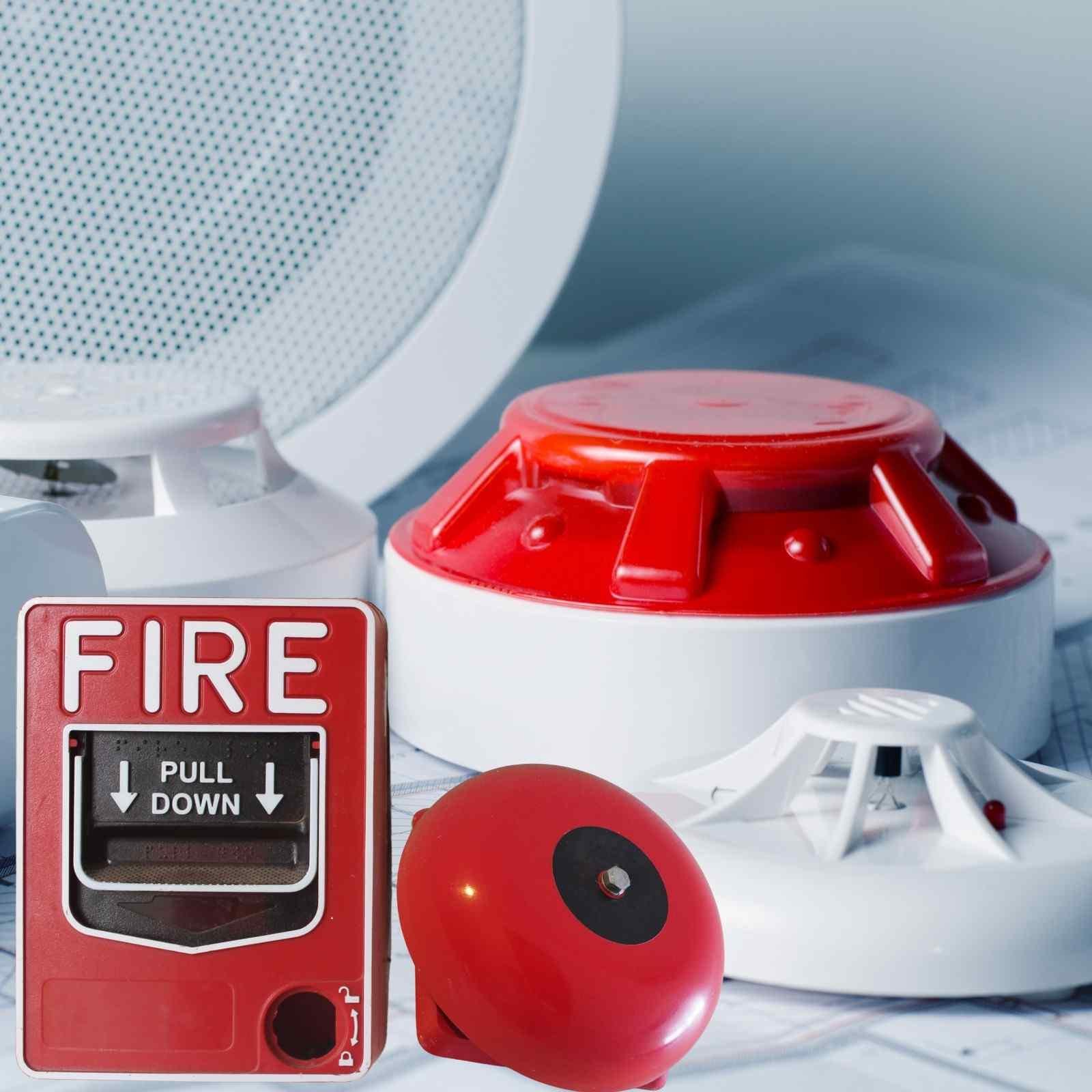
Detectors: Including smoke detectors that sense smoke from a fire, heat detectors that react to temperature rise, and flame detectors that respond to flame radiation.
Control Panels: The brain of the system, collecting signals from detectors, analyzing them, and activating alarms.
Audible and Visual Alarms (Sounders & Strobes): Issue audible and visual warnings to alert people to evacuate.
Manual Call Points: Allow individuals to manually activate the alarm upon fire detection.
Act Guard is committed to installing systems from globally renowned brands like Simplex and Honeywell, ensuring high activation accuracy in less than 30 seconds, with comprehensive periodic maintenance programs.
Fire Suppression: Extinguishing Flames Before They Spread
Following fire detection, fire suppression systems play their role in extinguishing flames automatically or manually. These systems are essential to limit the spread of fire and reduce resulting damages.
Types of Advanced Fire Suppression Systems
Fire suppression systems vary and diversify to suit different types of hazards and facilities:
Sprinkler Systems: The most common and effective in most buildings. They operate automatically when the temperature rises in a specific area and help extinguish fires in their early stages.
Clean Agent Systems: Used in sensitive areas where water might damage equipment, such as server rooms, laboratories, and medical centers. They use gases like FM-200 or Novec 1230 that suppress fire without leaving residues. Act Guard confirms the environmental safety of these gases and their lack of impact on the ozone layer.
Foam Suppression Systems: Effective in extinguishing fires caused by flammable liquids, such as fuel stations and factories handling petroleum materials.
Dry Powder Systems: Often used in large industrial areas and are effective in combating fires from multiple classes, including electrical fires.
Act Guard's Role in Designing and Implementing Suppression Systems
Act Guard specializes in designing and implementing customized fire suppression systems for each facility, based on a detailed risk analysis and the nature of activities. Its services include the supply, installation, and periodic maintenance of these systems to ensure their maximum readiness. The company also provides integrated suppression systems compliant with NFPA 2001 standards, offering rapid fire coverage within 10 seconds.
Fire Extinguishers: The First Line of Defense at Hand
Portable fire extinguishers are an essential tool and the first line of defense against small fires in their early stages. Providing suitable extinguishers in the right places and training individuals to use them can significantly limit fire spread and reduce damages.
Types of Fire Extinguishers and Their Uses
The appropriate extinguisher must be chosen based on the potential type of fire:
Water Extinguishers: Used for Class A fires (flammable solid materials like wood and paper). Not to be used for electrical or flammable liquid fires.
Foam Extinguishers: Effective for Class A and B fires (flammable liquids like petrol and oils).
Carbon Dioxide (CO2) Extinguishers: Ideal for electrical fires (Class C) and flammable liquids (Class B), as they leave no residue and are safe for electronic equipment.
Dry Chemical Powder Extinguishers: Multipurpose, capable of extinguishing Class A, B, C, and E (electrical equipment) fires.
Wet Chemical Extinguishers: Specifically designed for cooking oil and fat fires in kitchens (Class K).
Act Guard recommends the provision of at least one fire extinguisher per every 75 square meters in facilities and supplies CO2 and Dry Powder extinguishers in various sizes.
Periodic Maintenance and Inspection to Ensure Readiness
To ensure the effectiveness of fire extinguishers, they must undergo periodic inspection and maintenance. This includes a monthly check to ensure the extinguisher's integrity and pressure gauge, in addition to periodic maintenance every 6 months and refilling as needed. Act Guard provides supply, installation, maintenance, and refilling services for fire extinguishers, along with practical training on the correct use technique (PASS: Pull, Aim, Squeeze, Sweep).
Fire Prevention: Investing in Safety
Fire prevention is a set of proactive actions and measures aimed at preventing the outbreak of fires in the first place. Focusing on prevention significantly reduces the risk of incidents and contributes to a safer and more stable environment.
Effective Prevention Strategies
Fire prevention strategies include:
Awareness and Training: Educating individuals about fire risks and how to act in emergencies, and conducting regular evacuation drills to ensure preparedness. Act Guard offers specialized workshops and training programs.
Periodic Maintenance: Regularly inspecting and maintaining electrical appliances, heating and cooling systems, and ensuring the integrity of alarm and suppression systems.
Safe Storage: Storing flammable materials in designated areas away from heat sources, and avoiding storing materials in corridors and emergency exits.
Controlling Heat Sources: Turning off electrical appliances when not in use, and avoiding the use of substandard or damaged appliances.
Developing Emergency Plans: Identifying evacuation routes, designating assembly points, and forming trained emergency response teams.
Act Guard's Role in Promoting Prevention
Act Guard plays a pivotal role in helping facilities implement best fire prevention practices. Its services include conducting comprehensive risk assessments, identifying potential weaknesses, and providing recommendations to improve safety. The company also assists in preparing emergency plans and training personnel, in cooperation with the Saudi Civil Defense to develop advanced awareness programs.















 by activeGuard