Periodic maintenance and inspection are essential to ensure their maximum readiness and effectiveness.
Safety systems and firefighting equipment are fundamental pillars for ensuring the protection of lives and property in various facilities, ranging from simple residential buildings to complex industrial installations. In an era characterized by rapid technological advancement, automatic fire suppression systems have become indispensable solutions, providing immediate and effective responses to incidents before they escalate. These systems are designed to operate independently upon detecting fire indicators, such as heat, smoke, or flame, significantly reducing reliance on initial human intervention. This comprehensive guide aims to review the main types of automatic fire suppression systems, their components, operating mechanisms, advantages, and diverse applications, with a focus on the latest technologies and global safety standards.
Adopting these systems goes beyond mere compliance with legal regulations; it represents a wise investment that ensures business continuity, reduces material losses, and, most importantly, safeguards individuals. Fire, as one of the most dangerous disasters, can cause comprehensive destruction in a very short time, hence the paramount importance of modern prevention and suppression systems.
Importance of Safety and Firefighting Systems
The importance of safety systems and firefighting equipment extends beyond being a legal requirement to become an absolute necessity in an environment striving for comprehensive protection. These systems contribute to achieving vital goals: protecting lives and property, complying with strict standards and regulations, and reducing economic losses.
Protecting Lives and Property: The Top Priority
Fires are devastating disasters that can lead to significant human and material losses in an instant. Safety systems mitigate these risks through several mechanisms:
Early Detection: Advanced sensors allow detection of the slightest fire indicators, such as smoke, heat, or flame, in their initial stages.
Immediate Suppression: Automatic systems extinguish or control the fire automatically or manually, limiting its spread and reducing damage.
Safe Alert and Evacuation: Alarm systems issue audible and visual warnings to alert individuals, providing them with sufficient time for safe and organized evacuation.
Damage Reduction: By quickly controlling the fire, structural damage to the building is minimized, equipment is protected, and environmental pollution from combustion is limited.
Compliance with International Standards and Regulations
Most regulatory bodies and countries mandate the installation of safety systems and firefighting equipment according to strict international standards. Adherence to these standards reduces legal and financial risks and ensures the highest levels of safety:
NFPA (National Fire Protection Association): The foremost global reference for setting fire safety standards.
ISO (International Organization for Standardization): Establishes general quality and safety standards, including those related to firefighting systems.
BS (British Standards): National standards widely used in many countries.
Local Specifications: In addition to international standards, each country or region imposes its own specific requirements.
Reducing Economic Losses
Automatic suppression systems directly contribute to reducing the substantial economic costs associated with fires:
Lower Repair and Maintenance Costs: Early fire control prevents major damage requiring costly repairs.
Reduced Operational Downtime: In commercial and industrial facilities, fire means a halt in production or services, leading to significant financial losses. Effective systems minimize these periods.
Lower Insurance Premiums: Insurance companies often offer premium discounts for facilities equipped with advanced fire protection systems.
Automatic Fire Suppression Systems: Definition and Core Functions
Automatic fire suppression systems are engineering solutions designed for the automatic detection of and response to fires without the need for direct human intervention. These systems are vital in facilities requiring a high level of safety, such as skyscrapers, hospitals, data centers, factories, and airports. Their core functions are:
Early fire detection using a variety of sensors.
Automatic fire suppression or control until fire brigades arrive.
Alerting individuals via audible and visual alarm systems.
Integration with central control systems for comprehensive monitoring and management.
Types of Automatic Fire Suppression Systems
Automatic fire suppression systems vary to suit different facility types and fire hazards, each providing a distinct approach to firefighting.
1. Sprinkler System
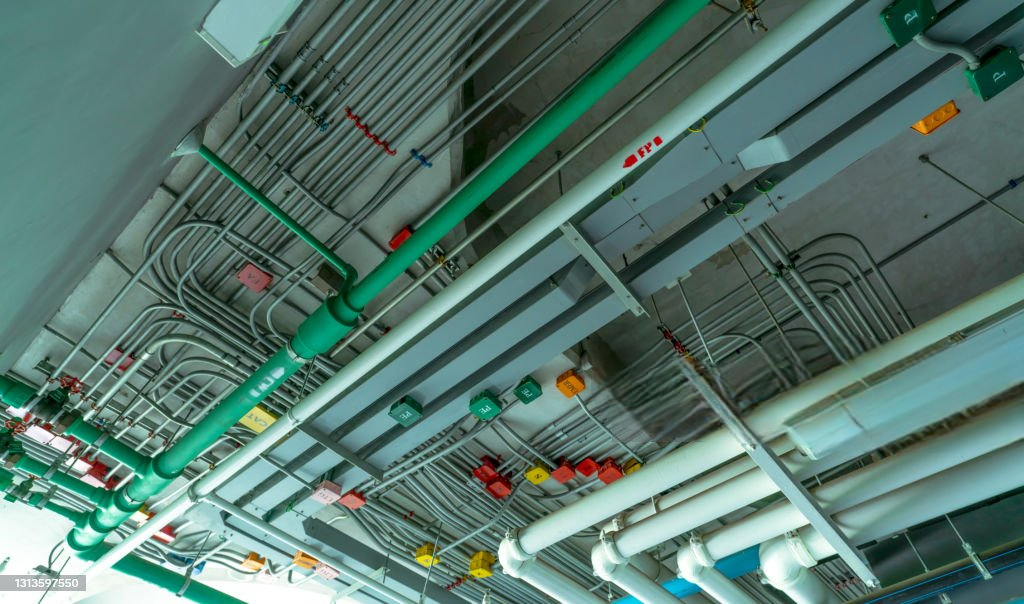
The sprinkler system is one of the most widespread and effective automatic fire suppression systems. It relies on a network of pipes distributed throughout the building, equipped with heat-sensitive water sprinklers. When the temperature rises due to a fire to a specific level, the sprinkler heads closest to the fire source activate and release water directly onto the affected area. These systems are known for their ability to suppress up to 90% of fires before fire brigades arrive.
Mechanism and Design: Sprinklers are usually installed in the ceiling or walls. The heat-sensitive element in each sprinkler (typically a glass bulb containing liquid or a metal alloy) bursts at a specific temperature (usually 68°C), allowing water under high pressure to flow and cover the fire-affected area. This flow is evenly distributed to ensure maximum coverage.
Common Types:
Wet Pipe System: The most common; pipes are permanently filled with water. Provides immediate response, suitable for areas not exposed to freezing.
Dry Pipe System: Used in cold areas where water might freeze. Pipes are filled with compressed air; upon activation, air escapes first, then water flows.
Pre-Action System: Requires a dual signal (from a fire detector and sprinklers) before water flows, reducing the risk of accidental discharge. Ideal for sensitive areas like museums and libraries.
Deluge System: Releases water from all sprinklers in a defined area simultaneously. Used in areas requiring rapid and comprehensive suppression, like hazardous material warehouses.
Combination System: Combines features of wet and dry systems to provide customized solutions.
Advantages and Applications: Highly effective, easy to maintain, and relatively low-cost. Widely used in residential and commercial buildings, hospitals, schools, factories, and warehouses.
2. Clean Agent Fire Suppression System
These systems are ideal solutions for areas containing sensitive equipment that cannot be exposed to water or foam. They work by smothering the fire or absorbing its heat without leaving any residue, ensuring no damage to equipment or disruption to operations.
Mechanism and Types: The gas is stored in pressurized cylinders and released automatically upon fire detection. It works by reducing oxygen concentration in the area or inhibiting the combustion chemical reaction.
FM200 (HFC-227ea): A highly effective gas that works by absorbing heat from the fire extremely quickly (within 10 seconds). Widely used in server rooms, data centers, and electrical control rooms. It is non-conductive and leaves no residue.
NOVEC 1230 (FK-5-1-12): Considered the newer generation of clean agents. Stored as a liquid and vaporizes upon discharge. Environmentally friendly, does not affect the ozone layer, and has a short atmospheric lifetime. Effective against electrical and liquid fires, used in the same sensitive applications as FM200.
Advantages and Applications: Leaves no residue or causes damage to equipment; highly effective against electrical fires; environmentally friendly; suitable for sensitive and critical areas. Applications include server rooms, data centers, laboratories, hospitals, museums, and control rooms.
3. Carbon Dioxide (CO2) Fire Suppression System
This system relies on releasing CO2 gas to lower the oxygen level in the burning area to below 15%, thereby suffocating the fire. CO2 is particularly effective against Class B (flammable liquids) and Class C (electrical) fires as it is a non-conductive gas.
Mechanism and Warnings: Carbon dioxide is stored in pressurized cylinders and released into the affected area upon fire detection. Despite its effectiveness, this system requires strict safety precautions, as CO2 can be dangerous to humans at high concentrations and may cause asphyxiation. Therefore, it is primarily used in unoccupied areas or with pre-alarm and evacuation systems.
Advantages and Applications: High effectiveness against liquid and electrical fires; leaves no residue or causes equipment damage. Applications include generator rooms, electrical rooms, hazardous material warehouses, and industrial processing areas.
4. Foam Fire Suppression System
Primarily used to combat flammable liquid fires (Class B), such as fuels and oils. This system works by creating a foam blanket on the surface of the burning material, isolating it from oxygen and cooling it, thereby preventing continued combustion and evaporation of flammable liquids.
Mechanism and Types: Water is mixed with a foam concentrate in specific proportions to produce foam, which is then distributed over the fuel surface. Foam is classified based on its expansion ratio:
Low Expansion: Dense foam used for extinguishing spilled liquid fires.
Medium Expansion: Used in industrial facilities for large-scale fires.
High Expansion: Light foam used to fill large spaces or protect large storage areas.
Advantages and Applications: Highly effective against flammable liquid fires; prevents re-ignition by covering the fuel surface. Applications include fuel depots, fuel stations, refineries, aircraft hangars, and airports.
5. Fire Pumps
Fire pumps are the beating heart of any water-based firefighting system, ensuring an adequate and continuous water pressure supply to the entire suppression network, including sprinklers and fire hydrants. These pumps increase water pressure from the source to ensure the required flow of water for effective fire suppression.
Types:
Electric Pumps: Operate on electrical current, used as main pumps in most systems.
Diesel Pumps: Operate with diesel engines, used as backup pumps or in areas prone to power outages.
Jockey Pumps: Small pumps that maintain constant pressure in the fire system to compensate for minor leaks and prevent unnecessary activation of the main pumps.
Advantages and Applications: Ensure high, continuous water pressure flow; essential for all large water-based systems. Used in all facilities relying on water-based firefighting systems, such as skyscrapers, commercial centers, and large factories.
Components of Automatic Fire Suppression Systems
Automatic fire suppression systems consist of several key components working in harmony to ensure an effective response to fire:
Fire Sprinklers: The parts that discharge the extinguishing agent (usually water). Available in different types to suit architectural design and space function:
Pendant Sprinklers: Installed with the nozzle facing downward, suitable for suspended ceilings.
Upright Sprinklers: Installed with the nozzle facing upward, used in areas without suspended ceilings or in warehouses.
Sidewall Sprinklers: Installed on walls, typically used in corridors or rooms with special dimensions.
Control Valves: Control water flow into the pipe network and isolate parts of it for maintenance or in emergencies:
Zone Control Valves: Allow independent control of water flow for each fire zone.
Outside Stem & Yoke (OS&Y) Gate Valves: Valves where the stem is visible outside the valve body when open, providing a visual indicator of the valve status (open or closed).
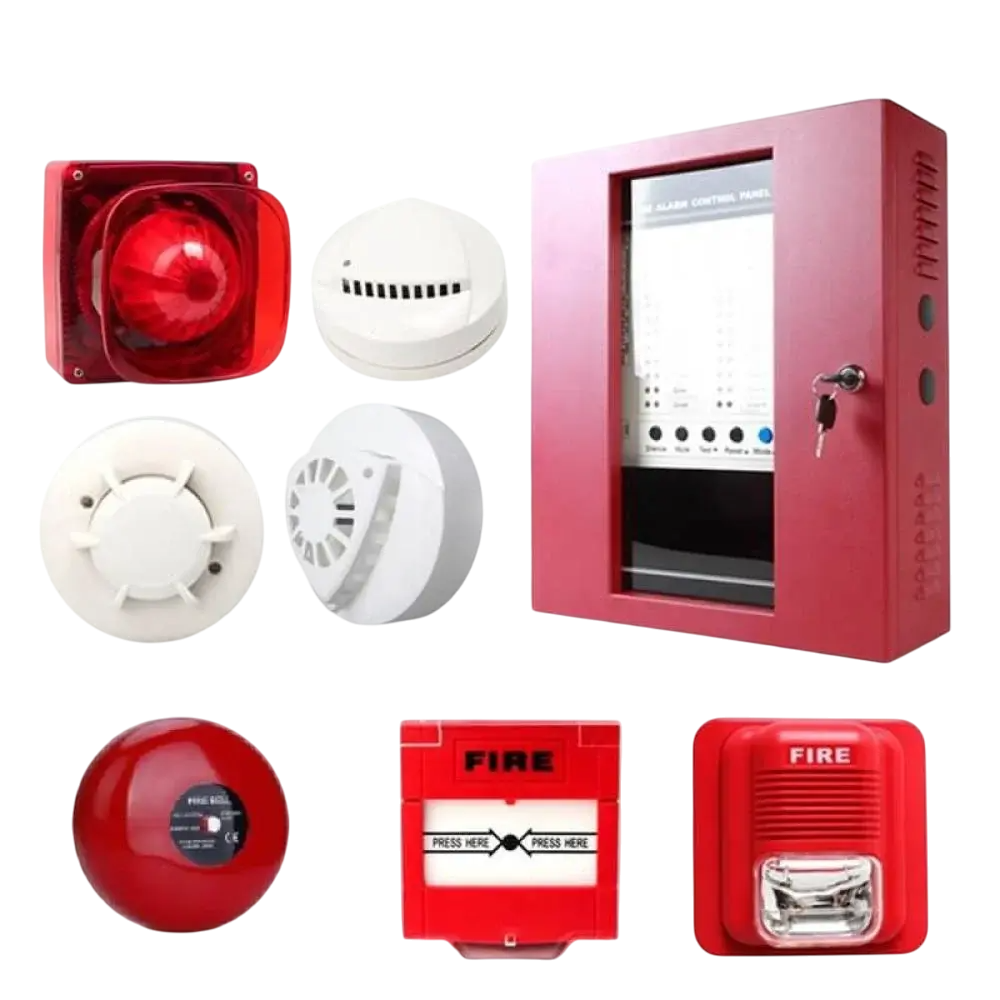
Alarm and Detection Systems: An integral part of automatic fire suppression systems, providing early warning and allowing for safe evacuation:
Manual Alarm Systems: Include manual call points allowing individuals to activate the alarm upon seeing a fire.
Automatic Alarm Systems: Rely on sensors (smoke detectors, heat detectors, flame detectors) that detect fire indicators and activate the alarm automatically.
Choosing the Appropriate Fire Suppression System for Your Facility
Selecting the optimal fire suppression system depends on several critical factors, including the nature of the facility, the type of flammable materials, and operational needs. A careful assessment of these factors ensures the highest degree of protection.
Based on Facility Type:
Residential Buildings and Offices: A water sprinkler system is often sufficient and effective.
Commercial Centers, Schools, and Hospitals: A combination of a water sprinkler system and a clean agent system for sensitive areas (e.g., server rooms in hospitals) is preferred.
Industrial Facilities and Warehouses: May require a foam system for liquid fires, and a CO2 or clean agent system for sensitive electrical equipment.
Data Centers and Server Rooms: Clean agent systems (FM200 or NOVEC 1230) are the best choice to protect sensitive electronic equipment from water damage.
Based on Fuel Type (Fire Classes):
Class A Fires (solid materials like wood, paper): Water sprinkler systems are most suitable.
Class B Fires (flammable liquids like petrol, oils): Foam systems are most effective, followed by CO2 or some clean agent systems.
Class C Fires (electrical equipment): Clean agent systems (FM200, NOVEC 1230) or CO2 systems are used as they are non-conductive and leave no residue.
Class D Fires (combustible metals like magnesium, sodium): Require special extinguishing agents (like certain dry powders) and are not covered by common automatic systems.
Class K Fires (cooking oils): Require special Wet Chemical extinguishing systems used in commercial kitchens.
It is always essential to consult fire safety experts to assess risks and design and install the most suitable system for your facility, in compliance with local and international standards and regulations.






 by activeGuard